Search engine optimization is one of the most misunderstood investments in digital marketing. Some businesses think it’s a one-time task. Others expect instant rankings after paying for a few keywords. Both are wrong.
If you’re considering SEO services, you need clarity on three things before spending a single rupee or pound:
- What you’re actually paying for
- How the SEO process works in real life
- What kind of ROI is realistic—and what’s pure fantasy
Let’s break it down without sugarcoating.
What SEO Services Really Include (and What They Don’t)
At its core, SEO services are about improving your website’s visibility in organic search results for queries that actually drive business. That’s it. No magic tricks.
A professional SEO optimization service usually covers three core areas:
Technical SEO
This is the foundation. If your site loads slowly, breaks on mobile, or confuses search engine crawlers, nothing else matters. Technical SEO typically includes:
- Site speed optimization
- Mobile usability fixes
- Crawlability and indexing checks
- URL structure and internal linking
If an agency skips this, they’re building on sand.
On-Page SEO
This is where content meets intent. On-page SEO aligns your pages with what users are actually searching for:
- Keyword research based on intent, not volume vanity
- Optimized titles, headings, and meta descriptions
- Content structure improvements
- Image optimization and internal linking
Good on-page SEO doesn’t read like it was written for bots. It reads like it was written for humans who happen to use Google.
Off-Page SEO (Authority Building)
Search engines trust websites that other trusted websites link to. That’s not negotiable.
- High-quality backlink acquisition
- Brand mentions and digital PR
- Local citations (if relevant)
If someone promises “100 backlinks in a week,” walk away.
SEO Pricing: Why Cheap SEO Is Usually Expensive
SEO pricing varies wildly, and for good reason. The cost depends on:
- Your industry competitiveness
- Your current website condition
- Geographic targeting (local vs national vs international)
- Business goals (traffic vs leads vs sales)
Here’s a realistic breakdown:
Low-cost SEO (Red Flag Zone)
Usually automated tools, recycled content, and spammy links. Short-term movement, long-term damage.
Mid-range SEO (Most Businesses Belong Here)
Strategic keyword targeting, proper audits, content improvements, and ethical link building. This is where ROI starts to make sense.
High-end SEO (Enterprise or Aggressive Growth)
Data-heavy strategies, advanced technical work, content at scale, and strong authority building.
SEO is not an expense—it’s a long-term asset. If pricing sounds too good to be true, it usually is.
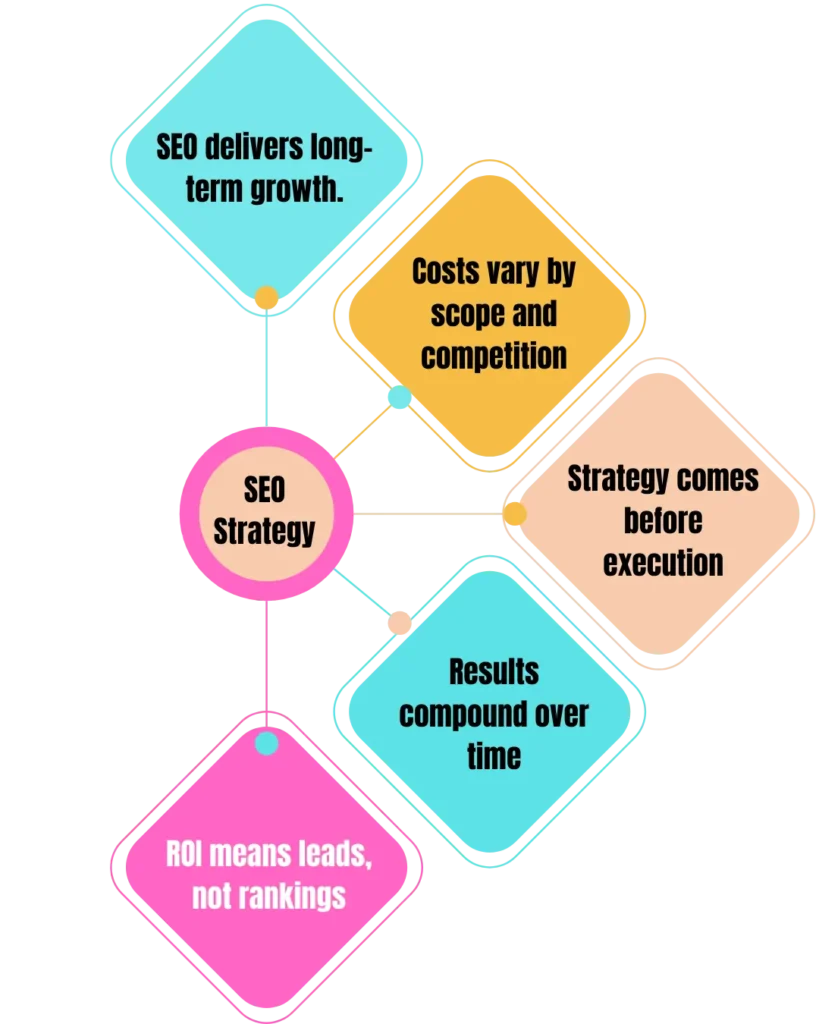
SEO services are a long-term growth strategy, not a quick fix. This article explains what SEO actually includes, how pricing works, the step-by-step optimization process, and how to measure real ROI.
It cuts through myths, highlights realistic expectations, and helps businesses choose SEO based on revenue impact—not rankings alone.
The SEO Process: What Actually Happens Month by Month
A legitimate SEO optimization service follows a structured process, not random tasks.
Month 1: Audit & Strategy
- Full technical and content audit
- Competitor analysis
- Keyword mapping to business goals
- Clear roadmap with priorities
If an agency jumps straight into “optimizing keywords,” they’re skipping homework.
Months 2–3: Foundation Fixes
- Technical issue resolution
- On-page optimization of priority pages
- Content gaps identified and planned
This phase is critical but often invisible. Rankings may not move yet—and that’s normal.
Months 4–6: Growth Phase
- Consistent content creation or optimization
- Authority building through quality backlinks
- Improved internal linking and UX signals
This is where momentum builds.
Months 6+: Compounding Results
- Rankings stabilize
- Traffic quality improves
- Leads and conversions start scaling
SEO rewards patience and consistency, not impatience.
SEO ROI: What You Should (and Shouldn’t) Expect
Let’s be blunt: SEO is not for businesses that want instant gratification.
What SEO does well:
- Delivers compounding traffic over time
- Lowers cost per lead compared to paid ads
- Builds brand credibility and trust
- Works 24/7 without paying per click
What SEO doesn’t do:
- Generate overnight results
- Guarantee #1 rankings for every keyword
- Replace poor products or weak sales funnels
ROI from SEO is best measured through:
- Organic traffic quality
- Lead or sales growth
- Customer acquisition cost over time
If your SEO provider only reports rankings and not business impact, they’re missing the point.
Choosing the Right SEO Partner
Here’s a hard truth: tools don’t rank websites—strategy does.
A reliable SEO partner will:
- Ask about your business goals, not just keywords
- Explain trade-offs honestly
- Set realistic timelines
- Show how SEO connects to revenue
Avoid anyone who guarantees rankings or avoids tough questions.
Final Thoughts
SEO works—but only when done properly. Understanding how SEO services are priced, executed, and measured protects you from wasting money and unrealistic expectations.
If you treat SEO as a shortcut, it will disappoint you. If you treat it as a long-term growth channel, it can outperform almost every other digital investment you make.
If you want SEO services that focus on measurable growth—not empty promises—now is the time to get serious.
👉 Book a strategic SEO consultation and find out what’s actually holding your website back.

1 thought on “SEO Services Explained: Pricing, Process, and ROI for Long-Term Growth”
Pingback: Search Engine Optimisation for UK Businesses: A Beginner’s Guide to Ranking Higher in 2026 - Digiactus